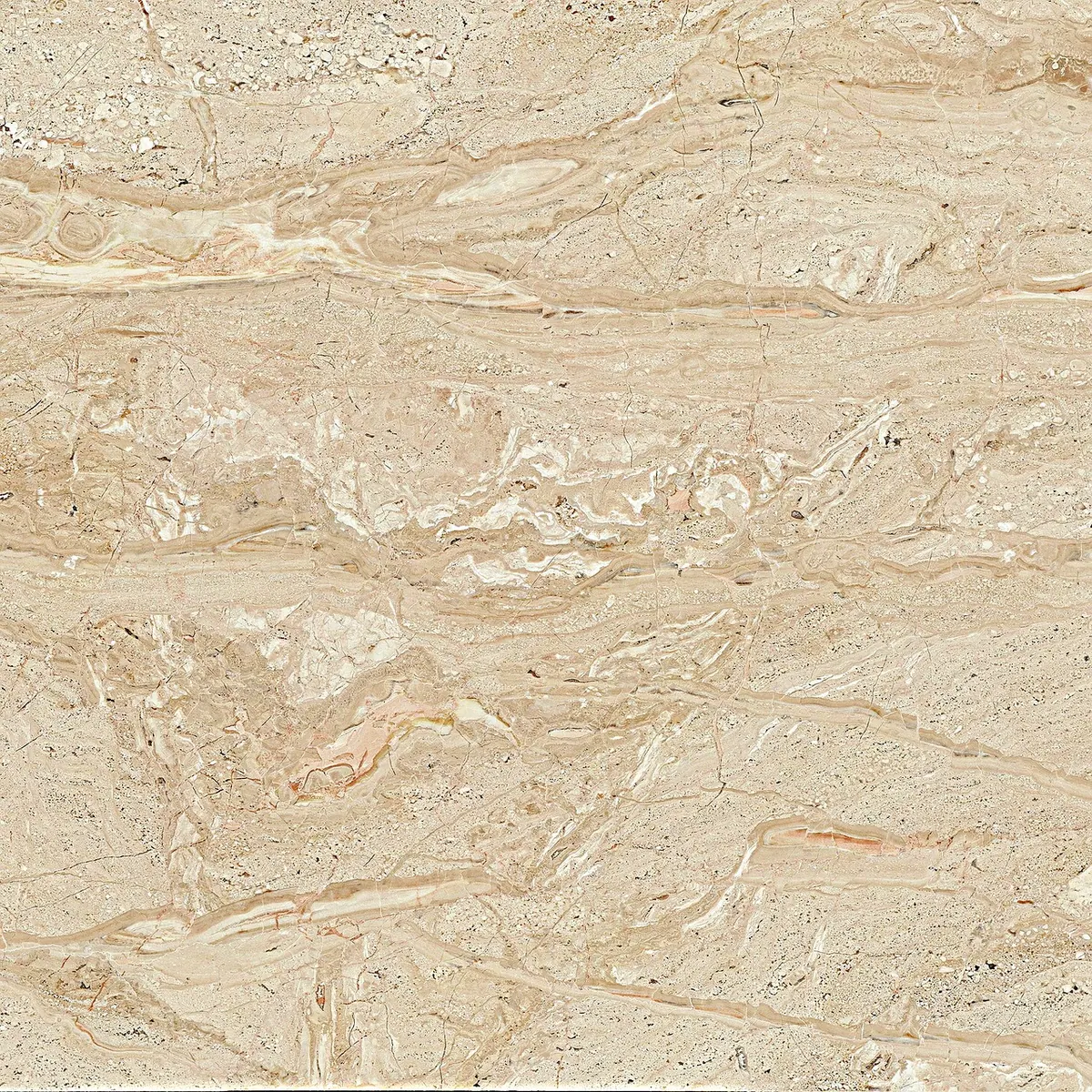
Travertine makes a room feel older and calmer than the day it was finished. The stone forms around mineral springs, which is why it carries those small voids, that banded, slightly cloudy surface, and the occasional fossil trace. It also means no two batches behave quite the same way. Choosing tiles for a floor and choosing tiles for a wall are different jobs: the slab that looks wonderful behind a bath can be a poor decision in a hallway that takes wet shoes every morning. What follows is a working checklist, room by room. Use it before you order, and again when the sample arrives.
Start with grade and filling, not colour
Grade is a shorthand for how many voids the block contains and how consistent the colour is. It matters more than most showroom conversations suggest, because the grade you choose determines how the stone will age underfoot.
Select or premium travertine has few holes and a tight, even tone. It is the right choice for large formats, book-matched walls and anywhere the eye will read the surface as one continuous plane. Standard grade has some voids, usually filled at the factory, and enough variation to look natural without looking patchy. For most residential floors this is the sensible middle. Rustic or commercial grade is open, pitted and strongly marked. It can be beautiful on a garden wall or a small-format outdoor terrace, where the texture is the point. On a kitchen floor, those holes become traps for flour, oil and grit.
Then there is filling. Filled tiles have their voids closed with a cementitious or resin compound, and the fill is tinted to match. Unfilled tiles keep the raw look but need more maintenance, particularly in wet areas. My rule: fill floors, and leave walls open only where nobody will scrub them.
Let the finish answer the wear question
Finish decides grip, sheen and how visible the scratches will be.
- Polished: mirror-like and luxurious, best kept to walls, low-traffic floors and bathrooms where water never pools. Wet polished travertine is genuinely slippery, and it shows etching from acidic cleaners and spills.
- Honed: matte and smooth, the most versatile finish in the range. It suits living rooms, kitchens and hallways, and it forgives everyday scuffing better than polish.
- Brushed or antique: lightly textured, with a slight sheen that hides marks and adds grip underfoot. A good compromise for entryways and family bathrooms.
- Tumbled: softened, rounded edges and a rustic surface. Small formats tumbled read as old stone; large ones can look unresolved.
- Bush-hammered: coarse and heavily textured, made for exterior paving, steps and pool surrounds.
Slip resistance is a measured property, not a feeling. Ask for the friction data for the exact finish you are being sold, and remember that the finish plus the joint layout together determine how safe a wet floor is.
Format, thickness and joint lines
Thickness follows function. Roughly 10–12 mm is fine for wall cladding over a sound substrate; 15–20 mm is the working range for interior floors; exterior pavers are usually 30 mm and up, laid on a suitable base or on adjustable pedestals. Thin tile over a bouncy timber floor is a recipe for cracked stone, so settle the substrate question before you settle the design.
Large formats give you fewer joints and a quieter surface, but they demand a very flat substrate and an installer who can handle lippage. Smaller formats with more grout lines are more forgiving, grippier underfoot and easier to replace if one tile fails. Rectified tiles can take a tight 2–3 mm joint; non-rectified or tumbled edges want 3–5 mm. Pick the grout colour deliberately: a grout close to the stone keeps the floor calm, a darker grout reads the pattern and hides grime in busy areas.
The room-by-room checklist
Entryways and hallways
Highest abrasion, most grit, most moisture. Choose filled standard or select grade, honed or brushed, 15 mm or thicker, in a mid-to-large format. Avoid polish entirely. A darker grout saves you a decade of scrubbing.
Kitchens
Acid is the enemy here: lemon, vinegar, wine, tomato. Honed and well sealed is the practical answer, in a format small enough to give grip and large enough to keep joints cleanable. Plan a mat or a different stone at the sink. Re-seal on the schedule your sealer manufacturer recommends, not on instinct.
Bathrooms
Polished travertine on walls, honed or brushed on the floor, always in a smaller floor format with a little texture. Confirm the shower falls correctly to the drain, and treat sealing as part of the build rather than an afterthought. Unfilled stone in a shower is asking for trouble.
Living rooms
A comfortable place to spend on select grade and larger formats, honed or lightly polished. Check the room's proportions against the tile module before committing, and dry-lay a few square metres to see how the veining repeats.
Terraces and pool surrounds
Go thick, go textured, and ask specifically about frost resistance and water absorption for your climate. Bush-hammered or split-face finishes stay grippy when wet. In freezing conditions, travertine needs the right specification or a different stone altogether.
Before you confirm the order
Ask for the batch or lot number and insist that all tiles come from the same one; travertine shifts tone noticeably between lots, and a second delivery six weeks later will not match. Order 10–15 percent extra for cuts, breakage and future repairs. Approve a physical sample, not a photo, and look at it in the room's own light — one that reads cream in the showroom can turn grey under a north-facing window.
When the tiles arrive, dry-lay them across the floor and shuffle the pieces before fixing. Then agree in writing who seals, when they seal, and with what. Seal before grouting, wipe the grout off the face promptly, and keep a small tin of the same sealer for later.
The final walk-through
Stand in the finished room and look at the floor at a low angle, with the light on. That is where lippage, shading and joint inconsistency show up. Then walk it in wet shoes. Travertine is a generous material: it warms up, it patinas, it forgives a lot. But it does not forgive a polished finish in a wet hallway or an unfilled tile in a shower. Match the grade, the finish and the format to the wear you actually expect, room by room, and the stone will keep looking better for the next twenty years. If the installation involves underfloor heating, structural changes or exterior work in a cold climate, take advice from a qualified installer or engineer before you buy.
Photo: Annagiang / Pixabay