Two slabs cut from the same block can leave the quarry looking like distant relatives. One is a mirror that doubles the light in a hallway; the other is a soft, chalky grey that seems to absorb it. Nothing has been added to either stone. The difference is a sequence of abrasive heads, brushes or hammer tips, run across the surface with more or less aggression. Finish is not decoration applied on top of the material — it is the material, exposed differently. And because it changes the surface at a microscopic level, it also changes how the stone behaves under a wet foot, a hot pan, a glass of red wine.
What a finish actually is
Think of a stone finish as a decision about how far to smooth the surface, and in which direction. Polishing takes the abrasive sequence furthest, closing the pores until light reflects cleanly. Honing stops earlier, leaving a matte surface with a faint tooth. Brushing works the surface with steel or diamond brushes, softening the softer minerals and leaving the harder ones slightly proud. Bush-hammering goes the other way entirely, fracturing the surface with carbide-tipped hammers so the stone breaks along its own grain.
Each of these changes three things at once: how the stone looks, how it feels, and how it ages. A useful habit is to judge a sample on all three before you fall for the appearance.
Polished: depth, drama, and a little maintenance
Polishing draws out the colour of a stone the way water does. Dark marbles go almost black; greens and reds deepen; veining sharpens. In a entrance hall, a polished floor reads as formal and expensive, and it bounces light into rooms that would otherwise be dim. On a kitchen island or a vanity top it feels cool and hygienic under the hand.
The trade-offs are honest ones. A polished surface is the smoothest of the family, so it offers the least grip once water, soap or oil is on it — a point worth taking seriously on bathroom floors, pool surrounds and any step. It also shows everything: dust, fingerprints, water marks, and the faint dull patches that acids leave on calcium-based stones such as marble, travertine and limestone. A slice of lemon left on a polished marble worktop will etch a matte ring into it, and no sealer prevents that. Clean with a pH-neutral product, wipe up spills promptly, and accept that polishing is a finish for people who don't mind a little wiping.
Honed: the quiet, forgiving middle
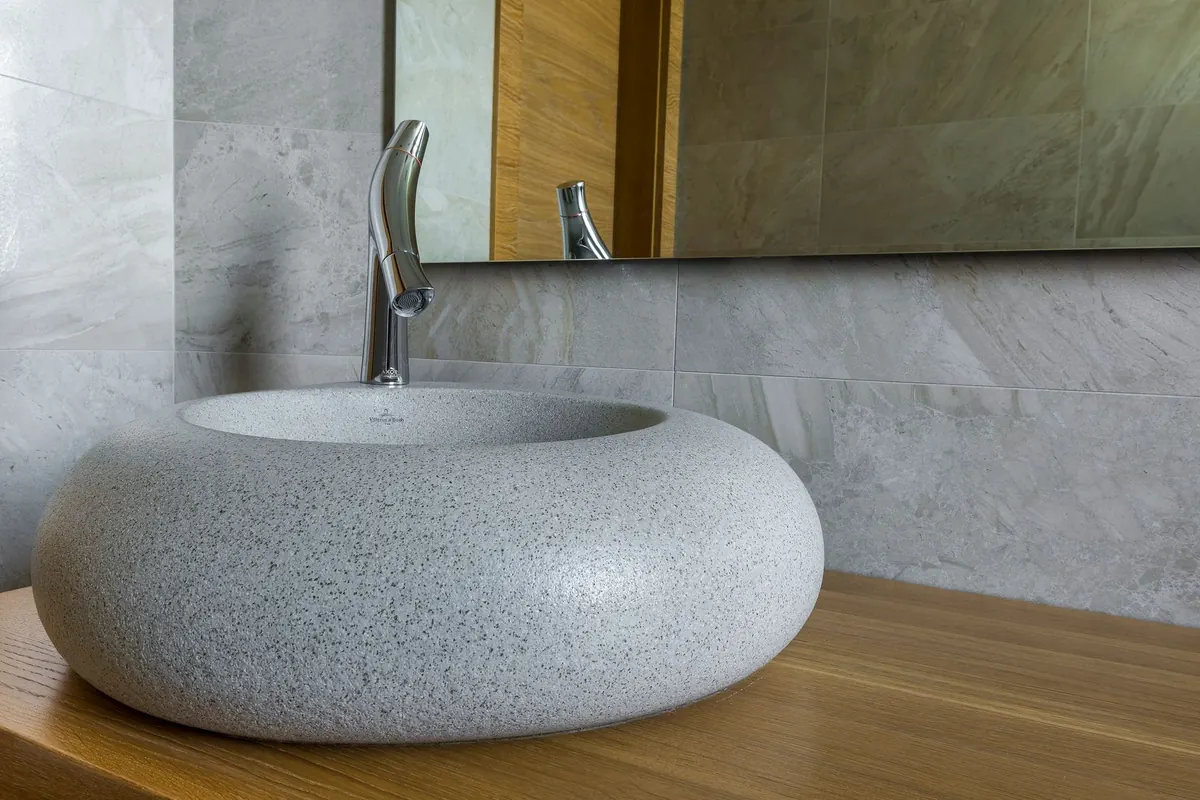
Honed stone has a flat, matte surface — smooth to the touch but without the glare. It is the finish most designers reach for when they want stone to feel contemporary rather than grand. A honed Pietra Serena worktop, a honed limestone floor in a kitchen, a honed travertine basin: these read as calm and grounded, and they hide scratches and dust far better than polish does.
Because honing stops before the pores close completely, the surface is slightly more open. That makes sealing more important, and it makes the stone a little more willing to hold a stain if something oily sits on it. The reward is grip: a honed floor is noticeably more secure underfoot than a polished one, though it is not a substitute for texture where water is constantly present. Honed is also the friendlier choice for large-format tiles, where a big polished field can look like a showroom floor and a honed one looks like a room.
Brushed and leathered: texture without drama
Brushing is where the surface starts to have a grain you can feel. Wire brushes lift the softer minerals and leave the harder ones standing slightly, producing a surface that is matte, slightly undulating, and much better at holding a foothold. On dense stones — granite, basalt, quartzite — the same process is often called leathered or satin, and it gives a beautiful soft sheen that changes with the light.
Brushed finishes are excellent for terraces, spa bathrooms, kitchen floors and anywhere a client wants stone that looks lived-in rather than polished. They are more forgiving of scuffs and footprints. In return, the texture traps dust and needs a stiff brush rather than a mop, and the increased surface area means sealer is consumed faster. Expect to reseal more often than you would with a honed surface, and to notice the difference if you don't.
Bush-hammered: the outdoor workhorse
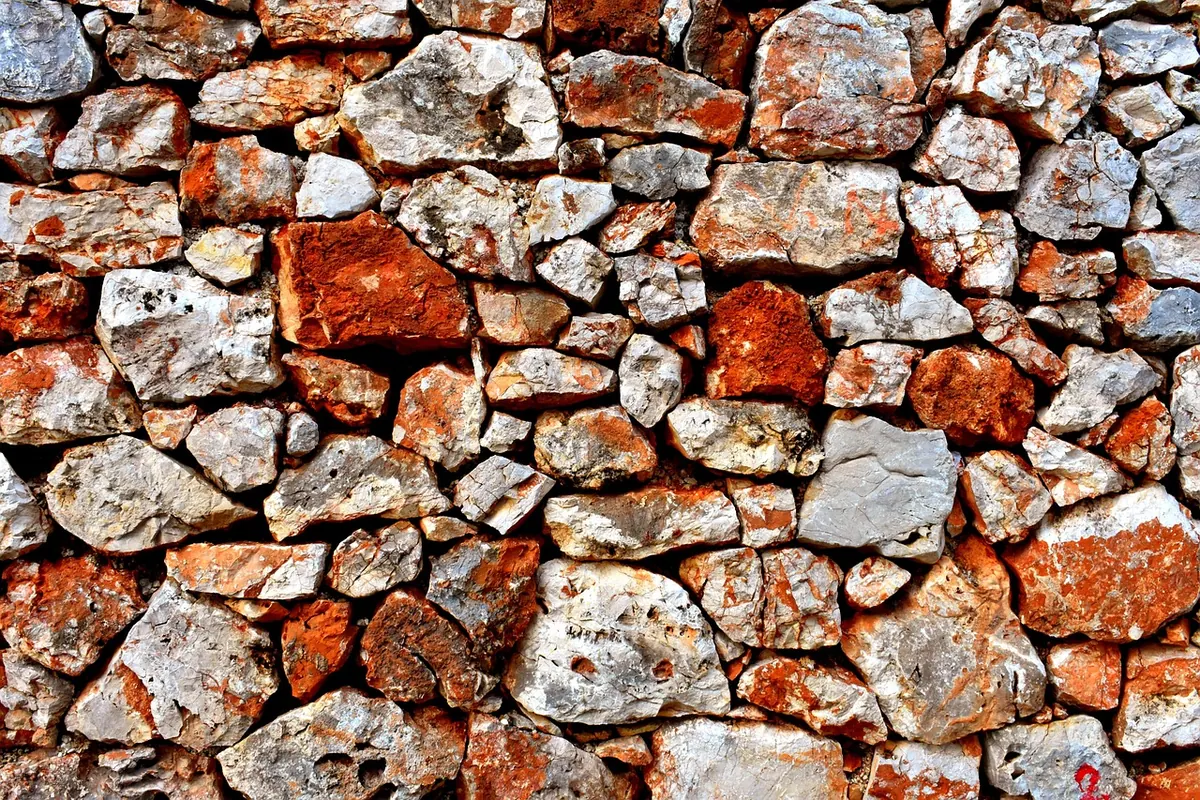
Bush-hammering is deliberately rough. Carbide tips pit the surface into a shallow, even craters, and the stone takes on a pale, matte, almost salt-and-pepper appearance. It is the traditional finish for steps, thresholds, courtyards and garden paving, and it remains one of the most practical: the texture grips, the surface hides dirt, and a wet bush-hammered step behaves very differently from a wet polished one.
It is also the finish with the most visible personality. On a vertical wall it reads as rustic and substantial; on a modern terrace it can be a deliberate contrast to smoother surfaces nearby. Bear in mind that deep texture collects debris in exterior settings, and that replicating a bush-hammered finish on site, around a socket or a cut edge, is skilled work. Order the finished pieces, including any cuts and edge profiles, from the fabricator rather than planning to texture them later.
Matching the finish to the room
There is no universal best finish, only a finish that suits the place it will live. A quick working order:
- Bathroom and shower floors: honed, brushed or bush-hammered. Avoid polished underfoot, and keep tiles small enough and joints wide enough that water can find the drain.
- Kitchen worktops: honed or brushed for a forgiving surface. Polished granite is fine and easy to wipe; polished marble is beautiful and will etch.
- Living rooms and hallways: polished where you want reflection and formality; honed where you want calm and easier upkeep.
- Terraces, steps, pool surrounds: bush-hammered, flamed or heavily brushed. Polished stone outdoors is a hazard waiting for rain.
- Fireplace surrounds and feature walls: honed for quiet, bush-hammered or split-face for weight and shadow.
Slip resistance and upkeep: what to check before you buy
Finish is only one variable in slip resistance. Stone type, tile size, joint width, drainage falls, sealer and what is actually on the floor — soap, cooking oil, wet leaves — all matter as much. Suppliers can provide test data for their surfaces, and public or commercial projects may be subject to specific ratings under local regulations. For a private home, the sensible test is simple: take the sample home, wet it, and stand on it in the shoes you actually wear.
Maintenance follows the same logic. Polished surfaces want a pH-neutral cleaner and a squeegee, never an acidic descaler on marble or limestone. Honed surfaces want sealing and prompt attention to oil. Brushed and bush-hammered surfaces want a stiff brush, a hose where possible, and a more frequent sealer schedule. Outdoors, expect efflorescence and organic growth in shaded, damp corners.
A finish is a promise about how a surface will behave for the next twenty years. Read the small print on a sample, not a photograph.
Samples, light, and the five-minute test
Before committing, order real samples in the actual stone — never judge from a brochure. View them in the room, at the hour of day you use it most, and again at night under the lighting you have specified. Then put them to work: wet one, spill a little oil on another, drag a coin across a third, and see how each one looks afterwards. Check how the finish reads on edges and where tiles meet, and ask your fabricator whether the finish can be restored later if the floor is worn or damaged.
Ask, too, how the sample compares with the slab you will receive; natural stone varies, and a brushed finish can look notably lighter or darker across a batch. A few minutes with a sample on the floor of your own kitchen will tell you more about grip, glare and upkeep than any number of showroom visits. Choose the finish you can live with, not just the one that photographs best — the stone will still be there long after the mood board has gone.
Photo: marijana1 / Pixabay